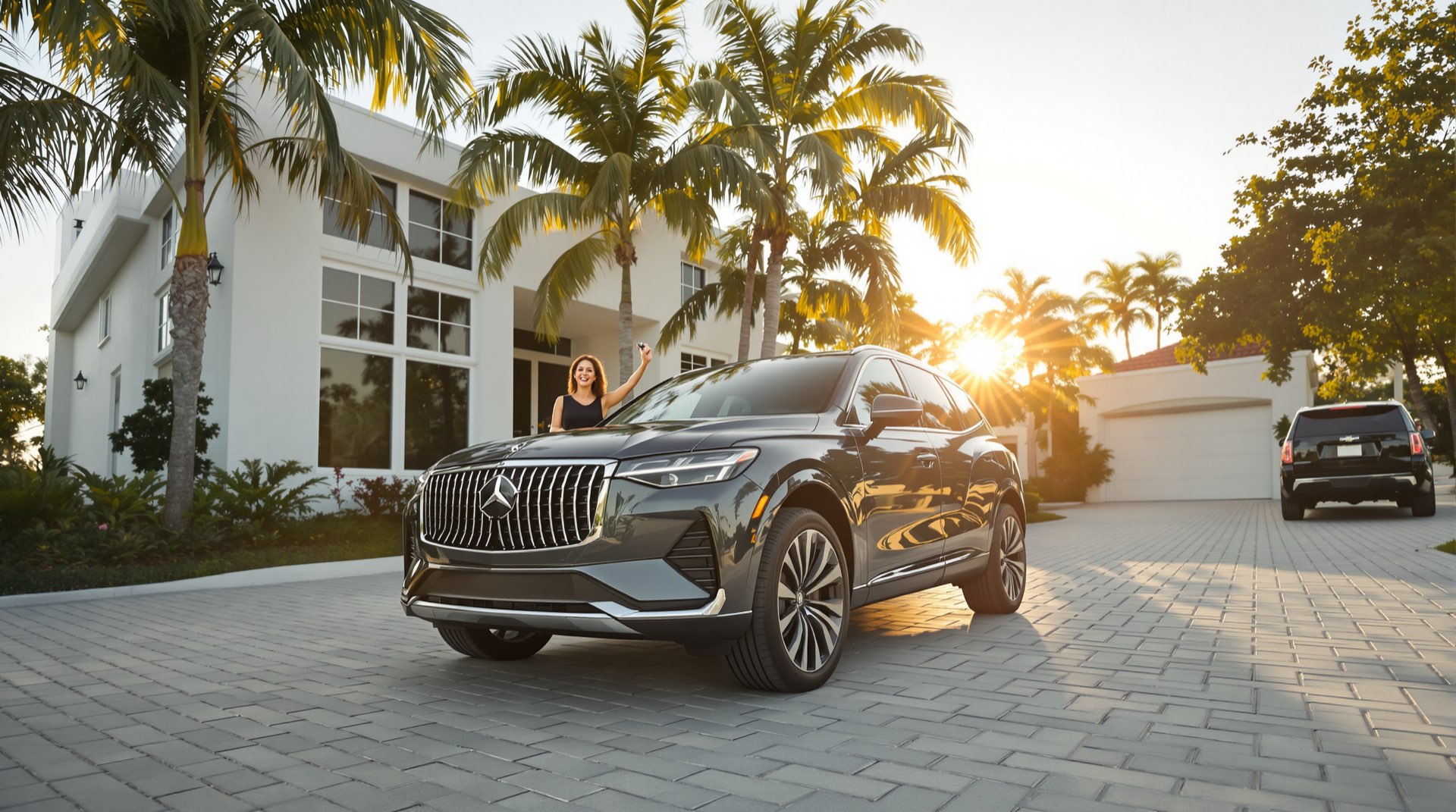
Car Delivery in Florida: How Home Delivery of Your New Car Works
Car delivery in Florida lets you buy a vehicle without spending a day at the dealership, but the paperwork, tags and taxes still have to be done right. This guide walks through each step, from signing to temporary tags to inspecting the car in your driveway.
 Reviewed by Adam Segall, founder of Honk Autos · Updated
The short answer
Car delivery in Florida works like this: the dealer prepares the contract and title paperwork, you sign at home or electronically, and the car arrives on a set date with a temporary tag that is generally valid for 30 days. The dealer files title and registration with the state, and you inspect the car before accepting it.
How car delivery in Florida works
Home delivery has become a normal way to buy a car. Instead of picking the vehicle up at the store, you agree on the deal remotely, review the paperwork and have the car brought to your home or office. The sale is still completed by a licensed dealer, and the same state rules apply as with a showroom purchase.
A typical delivery follows five steps:
- Agree on the deal. You or your broker settle the out-the-door price, including taxes and fees.
- Review the paperwork. The dealer prepares the buyer’s order, the retail installment contract or lease if you are financing, and the title and registration forms.
- Sign. Some documents can be signed electronically, while others are signed at delivery.
- Receive the car. The vehicle arrives with a temporary tag or your transferred plate.
- Inspect and accept. You check the car and documents before the driver leaves.
The details vary by dealer, but this outline covers most car delivery in Florida. The sections below explain the parts that trip people up, especially tags, title and taxes. If you are new to working with a broker, our guide on what a car broker is covers the basics.
Who delivers the car: dealer, carrier or broker
There are three common ways a purchased vehicle reaches your driveway.
- Dealer delivery. A dealer employee drives the car to you or brings it on a trailer. This is common when the dealer is within a reasonable drive, such as elsewhere in South Florida.
- Transport carrier. When the car comes from farther away, including another state, a licensed auto transport company moves it, often on a multi-car carrier. Timing depends on distance and the carrier’s schedule.
- Broker-coordinated delivery. A broker arranges the dealer, the transport and the delivery appointment, and makes sure the paperwork arrives with the car or ahead of it.
Whichever method is used, the goal of car delivery in Florida is the same: the right car, the right paperwork and a clear handoff at a time that suits you. Weekday evenings and weekends are often possible, which matters if you work shifts or long hours.
Ask who is responsible for the car while it is in transit, and get the expected delivery window in writing. If a transport company is involved, ask whether the car will arrive by open or enclosed carrier. Enclosed transport is common for luxury and exotic vehicles.
Some dealers charge a separate delivery fee, and others include it. Find out before you agree to the deal, so it is part of the out-the-door number rather than a surprise. With a broker like Honk, delivery is part of the service, and you never set foot in a dealership.
For businesses ordering pickups, box trucks or work vans, delivery can also be scheduled to a job site or yard. Our fleet vehicle broker page explains how we handle multi-unit orders.
The paperwork you sign for car delivery in Florida
Delivery does not mean less paperwork. It means the paperwork comes to you. Expect most of these documents on a Florida purchase.
- Buyer’s order or bill of sale. Lists the vehicle, price, fees, taxes and trade-in. Every number should match what you agreed to.
- Financing or lease contract. If you are financing through the dealer, this shows the rate, term and total cost. If you lease, it lists the capitalized cost, money factor and fees.
- Title and registration application. Lets the dealer apply for your Florida title and registration with the state.
- Odometer disclosure. Federal and state law require the mileage to be stated in connection with a title application.
- Proof of insurance. FLHSMV requires at least $10,000 in personal injury protection (PIP) and $10,000 in property damage liability (PDL) at the time of registration.
- Used car Buyers Guide. For used vehicles, the FTC’s Used Car Rule requires a Buyers Guide that shows whether the car is sold as is or with a warranty.
Read everything before you sign. The FTC suggests asking for a printed copy if you cannot see the full terms in an electronic signing system. Check that the contract lists only the add-ons you agreed to, at the quoted prices.
A well-run car delivery in Florida puts these documents in front of you before the car arrives, so you can ask questions without a driver waiting.
Temporary tags and your permanent plate
Most delivered cars arrive with a temporary tag. Under s. 320.131, Florida Statutes, a temporary tag is generally valid for 30 days, and no more than two may be issued to the same person for the same vehicle. Some special situations have different time limits.
The state runs an electronic system that licensed dealers use to issue temporary tags, and the statute allows dealers to charge a fee to comply with it. That is why you may see a temporary tag or electronic filing charge on your paperwork. Ask what it is if it is not clear.
If you already have a Florida plate from a car you are trading in or selling, you may be able to transfer it to the new vehicle instead of getting a new plate. Talk to the dealer about this before delivery, because it affects which fees you pay.
FLHSMV lists a license plate fee of $28 for an original or replacement plate and an initial registration fee of $225. Whether those apply to you depends on your situation, such as whether you are transferring a plate. The dealer typically collects these at signing.
Keep the temporary tag paperwork in the car along with your insurance card. If you are stopped, or if you need to show proof of ownership before the permanent registration arrives, those documents answer most questions.
Keep an eye on the date printed on your temporary tag. If your permanent plate and registration have not arrived as the expiration approaches, contact the dealer. During car delivery in Florida, the dealer is usually the one who files for your registration, so they are the right first call.
Title and registration through FLHSMV
Florida titles and registrations are handled through the Florida Department of Highway Safety and Motor Vehicles, with county tax collector offices processing many transactions locally. When you buy from a dealer, the dealer normally prepares and submits the title and registration paperwork for you.
FLHSMV publishes the state fees. Some key ones:
- Original title, new vehicle, electronic: $77.25
- Original title, used vehicle, electronic: $85.25
- Paper title: an added $2.50 service and handling fee
- Lien recording: an additional $2 may apply
- Base registration tax for automobiles: $14.50, $22.50 or $32.50 depending on weight, plus other statutory fees
If you finance the car, the lender is recorded as the lienholder. The title is released once the loan is paid off. On a lease, the leasing company typically holds the title for the length of the lease.
Insurance must be in place at registration. FLHSMV requires a minimum of $10,000 in PIP and $10,000 in PDL for vehicles with four or more wheels, and coverage must stay active for the full registration period, even if the car is parked.
Electronic titles are common in Florida, and the title fees above reflect that. If you want a paper title in hand, expect the added service and handling fee. When a loan is involved, the lender is usually the one holding the title record until payoff anyway.
A good dealer or broker will tell you what was filed and when, so you are not left guessing about your plate or registration. If you are comparing fees between dealers, our guide to Florida dealer fees shows which charges are set by the state.
Sales tax on a delivered car
Delivery does not change your sales tax. Florida charges 6% state sales tax on motor vehicles, and the Florida Department of Revenue says tax is due on the sales price, including separately itemized charges like preparation or closing fees. State-mandated title, registration and lien fees are not taxed.
The county surtax follows you, not the dealer. According to the Department of Revenue, surtax is due based on the county in the buyer’s address on the title or registration, and it applies only to the first $5,000 of the purchase price. Rates change over time, so check the current Form DR-15DSS for your county.
That means a buyer in Palm Beach County who purchases from a dealer in Broward County pays the surtax rate for Palm Beach, based on the address on the registration. The same rule applies to buyers in Martin and St. Lucie counties.
A trade-in can reduce the tax. A registered dealer may deduct the trade-in allowance from the taxable sales price when the trade is part of the same transaction. If your trade is picked up at the same time your new car is delivered, confirm that the paperwork treats it as one transaction.
The bottom line for car delivery in Florida: the tax math is the same as in the showroom. Make sure the tax lines on your contract use your home county.
Buying from an out-of-state dealer
A wide search sometimes finds the right car in another state. That is normal for brokers, and it adds a few steps.
Florida tax still applies. The Department of Revenue allows a credit for a like tax lawfully paid to another state. If the other state’s rate is lower than Florida’s, you pay the difference, plus any county surtax, when the car is titled and registered in Florida. Ask the selling dealer up front how Florida tax will be handled on your deal.
VIN verification for used cars. FLHSMV form HSMV 82042 is used to verify the vehicle identification number and odometer. The form says VIN verification is required on all used motor vehicles not currently titled in Florida. It can be completed by a Florida notary, a Florida licensed dealer, a law enforcement officer, a military police officer or a Florida compliance examiner.
Transport time. A car coming from several states away may take longer to arrive than a local one. Plan your temporary tag, insurance start date and old-car handoff around a realistic delivery window.
A broker who regularly sources out of state will know which paperwork the selling dealer will provide and which steps happen in Florida. That coordination is a big part of smooth car delivery in Florida when the car starts its trip somewhere else.
What to inspect when the car arrives
Take your time at delivery. Once you accept the car, problems are harder to sort out. Use this checklist.
- Walk around the car in good light. Look for scratches, dents, chips and mismatched paint, especially if it came by carrier.
- Match the VIN. The VIN on the dashboard and door jamb should match the contract and title paperwork.
- Check the odometer. New cars should show delivery miles only. Used car mileage should match the disclosure.
- Confirm the trim and options. Color, wheels, packages and features should match what you ordered.
- Look inside. Check seats, screens, trim and the cargo area for damage or wear.
- Test the basics. Start the car, check warning lights, try the air conditioning, windows, locks and infotainment.
- Count the keys and accessories. Confirm the number of key fobs, floor mats, cargo cover and charging equipment for EVs.
- Review the paperwork again. Make sure the temporary tag is on the car and the numbers on the final documents match your deal.
Plan for the inspection to take at least 30 minutes, and longer for a vehicle with lots of technology. Have the driver or your broker show you how to pair your phone, set up any connected-car app and use features you have not had before. Car delivery in Florida should end with you confident in the car, not just holding the keys.
Take photos of anything you find before the driver leaves, and note it on the delivery paperwork. For used cars, the FTC recommends an independent inspection before you buy, so schedule that before final acceptance if you can.
If something is wrong at delivery
Most deliveries go smoothly, but it helps to know what to do if they do not.
- Cosmetic damage. Photograph it, note it on the delivery receipt and contact the dealer or broker right away. Small issues are often fixed at the dealer’s expense, but get the agreement in writing.
- Wrong options or trim. Do not accept the car if it does not match your order. Call your broker or salesperson before the driver leaves.
- Paperwork errors. If a number on the contract does not match your deal, ask for a corrected document before you sign.
- Mechanical concerns. Warning lights or obvious problems should be reported immediately. New vehicles carry the manufacturer’s warranty, and used vehicle coverage depends on the Buyers Guide.
If you have a dispute you cannot resolve with the dealer, the FTC accepts reports about dishonest dealer practices. For legal questions about a specific contract, speak with an attorney.
Prevention is easier than repair. Confirming the VIN, options and price in writing before the car ships removes most of the reasons a delivery goes wrong. So does a quick call the day before to confirm the time, address and who will be there to sign.
Having an advocate helps here. A broker who negotiated the deal knows what was promised and can push the dealer to fix problems, which is far easier than starting from scratch on your own.
How Honk handles delivery for you
Delivery is built into every Honk Autos deal. We negotiate the price, the dealer sends the paperwork, and the car is delivered to your home or office. You never have to set foot in a dealership. We confirm the delivery window, make sure the paperwork matches the deal and stay on call while you inspect the car.
We source vehicles through more than 300 dealer contacts nationwide and serve Broward, Palm Beach, Martin and St. Lucie counties. Our flat fee is $499 for first-time clients and $249 for first responders and repeat clients. Honk is part of the same company as Hollywood Motors.
See how it works, check our service areas, or contact us with the car you want. Curious about cost? Read our guide to car broker fees.
Sources
- Florida Statutes 320.131: Temporary tags
- FLHSMV: Motor vehicle title and registration fees
- FLHSMV: Florida insurance requirements
- FLHSMV Form HSMV 82042: VIN and odometer verification
- Florida Department of Revenue: Sales and Use Tax on Motor Vehicles (GT-800030)
- Florida Department of Revenue: Discretionary Sales Surtax (DR-15DSS)
- FTC Consumer Advice: Buying a Used Car From a Dealer
- FTC Consumer Alert: Buying a car or truck?
Keep reading
- What Is a Car Broker? How They Work and When to Use One
- Car Broker Fees: What Brokers Charge and How to Compare Them
- Car Broker vs Dealer: Which Is Better for Your Next Car?
- Florida Dealer Fees: What You Pay and What You Can Negotiate
- Is a Lease Broker Worth It? An Honest Look at the Math
- How it works
- Service areas
- Fleet & work truck broker
- Car broker
Car delivery in florida: FAQ
How long is a Florida temporary tag valid?
Under s. 320.131, Florida Statutes, a temporary tag is generally valid for 30 days, and no more than two may be issued to the same person for the same vehicle. Some special cases have different time limits. If your permanent plate or registration has not arrived before your tag expires, contact the dealer that filed your paperwork.
Who handles title and registration when a car is delivered?
When you buy from a dealer, the dealer normally prepares and submits the title and registration paperwork to the state on your behalf, and collects the FLHSMV fees at signing. You will need valid Florida insurance with at least $10,000 in PIP and $10,000 in PDL in place at the time of registration.
Can I buy a car from another state and have it delivered to Florida?
Yes. You will still owe Florida sales tax, with credit for a like tax paid to the other state, plus your county surtax on the first $5,000. Used vehicles not currently titled in Florida also need VIN verification on FLHSMV form HSMV 82042. A broker can coordinate the transport and paperwork.
Is there a fee for car delivery in Florida?
It depends on the dealer. Some include delivery, some charge a separate fee, and out-of-state transport may cost more. Ask for delivery charges to be included in your written out-the-door price. With Honk, delivery is part of our flat-fee service, so you are not paying extra to skip the showroom.
What should I check before accepting a delivered car?
Walk around the car for damage, match the VIN to your paperwork, check the odometer, and confirm the trim, color and options. Test the basic features, count the keys and review the final documents. Photograph anything wrong and note it on the delivery receipt before the driver leaves.
Does the sales tax depend on where the car is delivered?
The county surtax depends on the address on your title or registration, not the dealer’s location, according to the Florida Department of Revenue. The 6% state sales tax applies statewide. So a Martin County resident buying from a Broward dealer pays the surtax rate that applies in Martin County, on the first $5,000 of the price.
Get your free quote
Tell us what you’re after. A Honk broker will call you, usually the same business day, to talk through options. The call is free and there’s no obligation.
- Free consultation, no obligation
- One flat fee: $499, or $249 for first responders and repeat clients
- New, used, lease, luxury and fleet vehicles
- Paperwork to your door, car to your driveway
Prefer to talk now? Call (954) 483-9229
Got it. We’re on it.
A Honk broker will call you shortly. For anything urgent, call (954) 483-9229.